
Algorithms and Access: Reflections on FAccT 2025 and Inclusive AI
Tlamelo Makati reports from Athens, exploring ethical design, participatory research, and what it means to shape AI with care.


An update from Data x Direction Summer 2025 intern Tlamelo Makati. She is pursuing her PhD at Technological University Dublin.
I recently had the opportunity to attend the ACM FAccT (Fairness, Accountability, and Transparency) Conference, which was held at Athens, Greece from June 23 to June 26th. I participated in the Doctoral Consortium, attended several tutorials, and engaged in conversations at the intersection of AI, ethics, and design.
Below are some personal reflections, takeaways, and resonances with my own work on inclusive AI-driven digital accessibility.
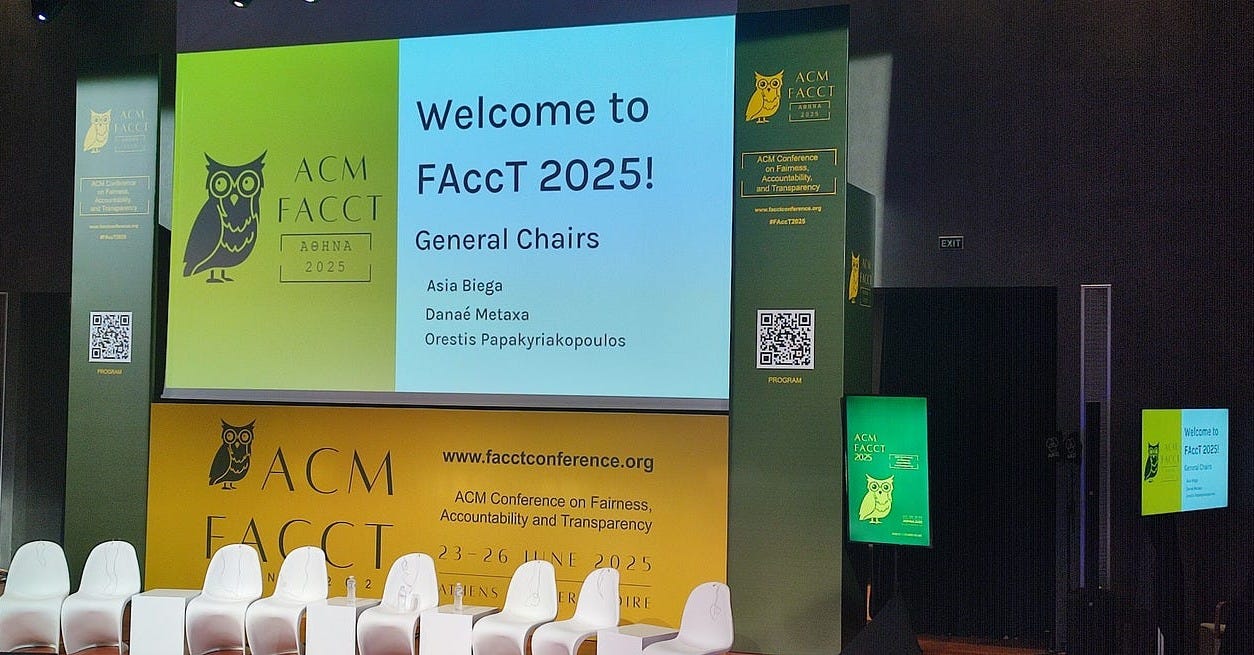
Doctoral Consortium: A Space for Vulnerability and Vision
I shared a two-minute pitch on my research titled From Algorithms to Access: A Framework for Inclusive AI-Driven Digital Accessibility through Multi-Stakeholder Participatory Design (working title).
It was a surreal experience, trying to summarise months of thinking into a tight, purposeful message.
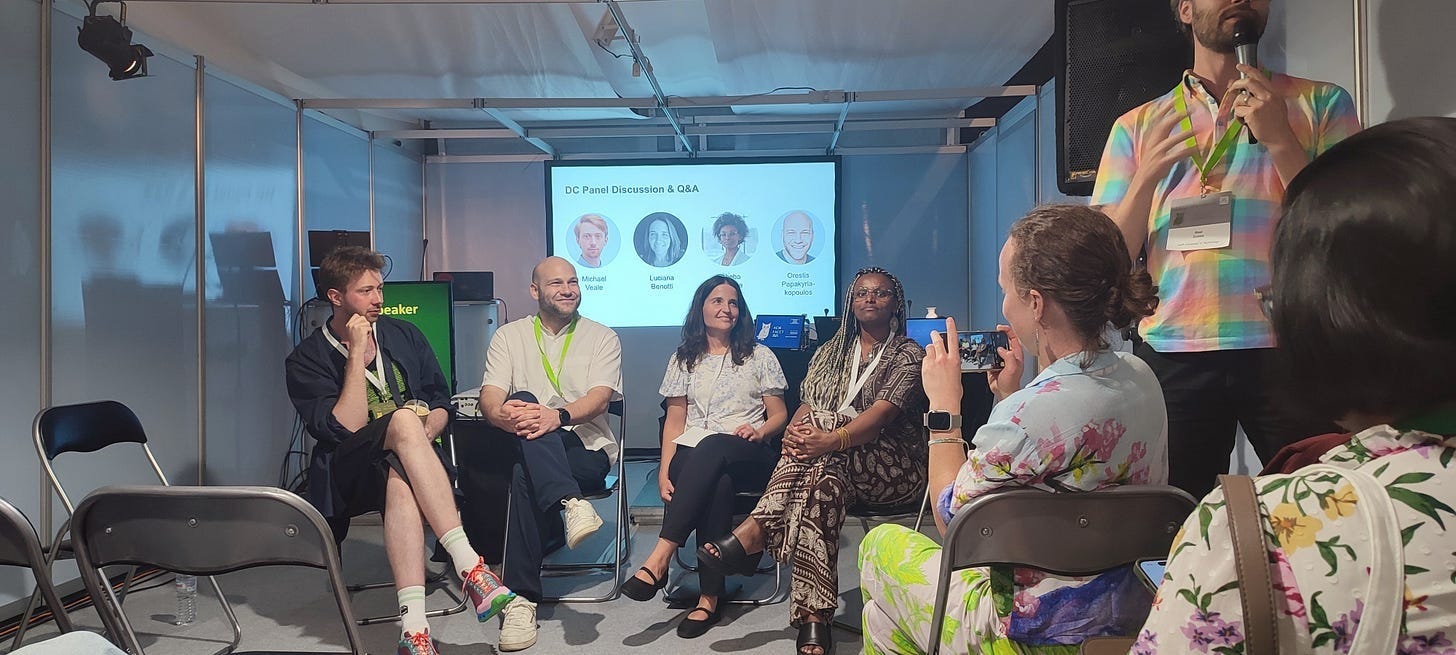
The mentorship sessions were intimate, grounding, and unexpectedly therapeutic. A few pieces of advice still ring in my ears:
“The best thesis is a done thesis.” This reminder to resist perfectionism was both freeing and humbling.
“Know your audience.” Whether it’s your thesis, your viva, or your policy work, tailoring your message to your audience is a skill as much as it is a strategy.
“Rest is part of the process.” Burnout helps no one, not your ideas, not your community.
What I took most from the consortium was not just academic advice, but encouragement to find and build community: to work with kind people, and to narrate my research story in a way that feels authentic and grounded.
Tutorials: Bridging Ethics and Practice
Two tutorials in particular offered concrete ways to rethink ethical engagement in AI research:
1. Ethical Design Science Research (EDSR)
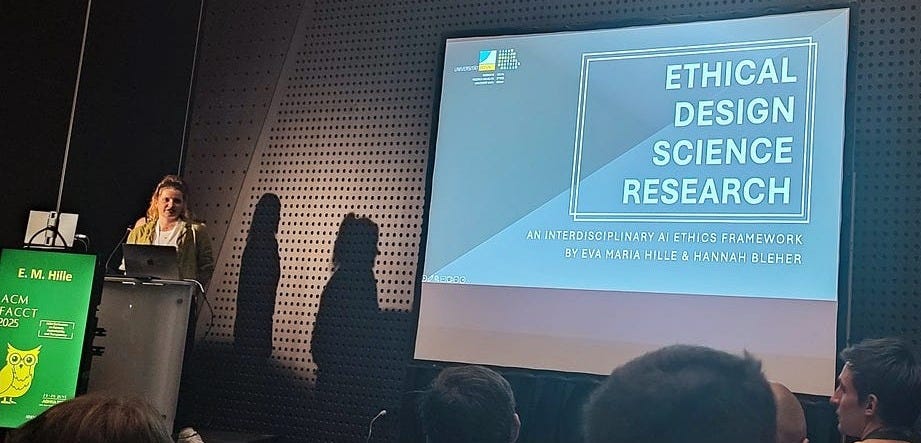
Led by Eva Maria Hille and Hannah Bleher, this session introduced a participatory framework that embeds ethics within the design and development of AI systems. EDSR invites us to consider:
Whose voices are heard?
Whose experiences shape the design?
What structural vulnerabilities are ignored in our pursuit of technical rigor?
It mirrored my own concerns in digital accessibility: the tension between abstract ethical principles and real-world, lived experience.
2. Sociotechnical Expertise in AI Governance
This tutorial (by Serena Oduro et al.) explored the messiness of translating research into policy. It emphasized the importance of narrative framing, of navigating bureaucratic turbulence, and of strategically choosing one’s stance.
It highlighted how sociotechnical expertise (often undervalued in policy discourse) is crucial in ensuring AI governance attends to both systemic structures and individual realities.
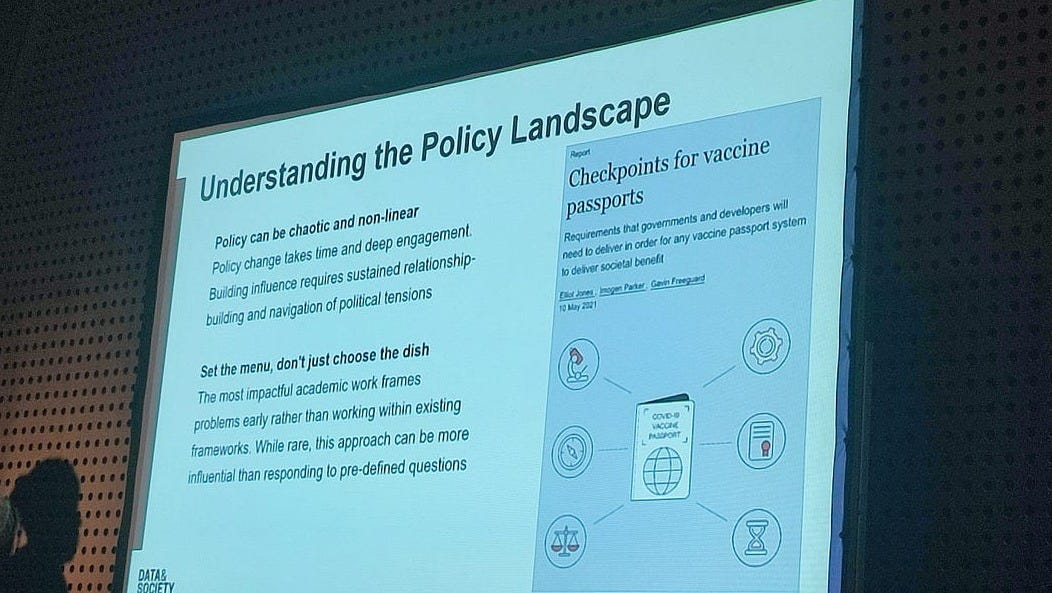
Papers That Shifted My Thinking
The conference sessions on ethics, design, and AI were full of provocative provocations. A few themes that particularly stood out:
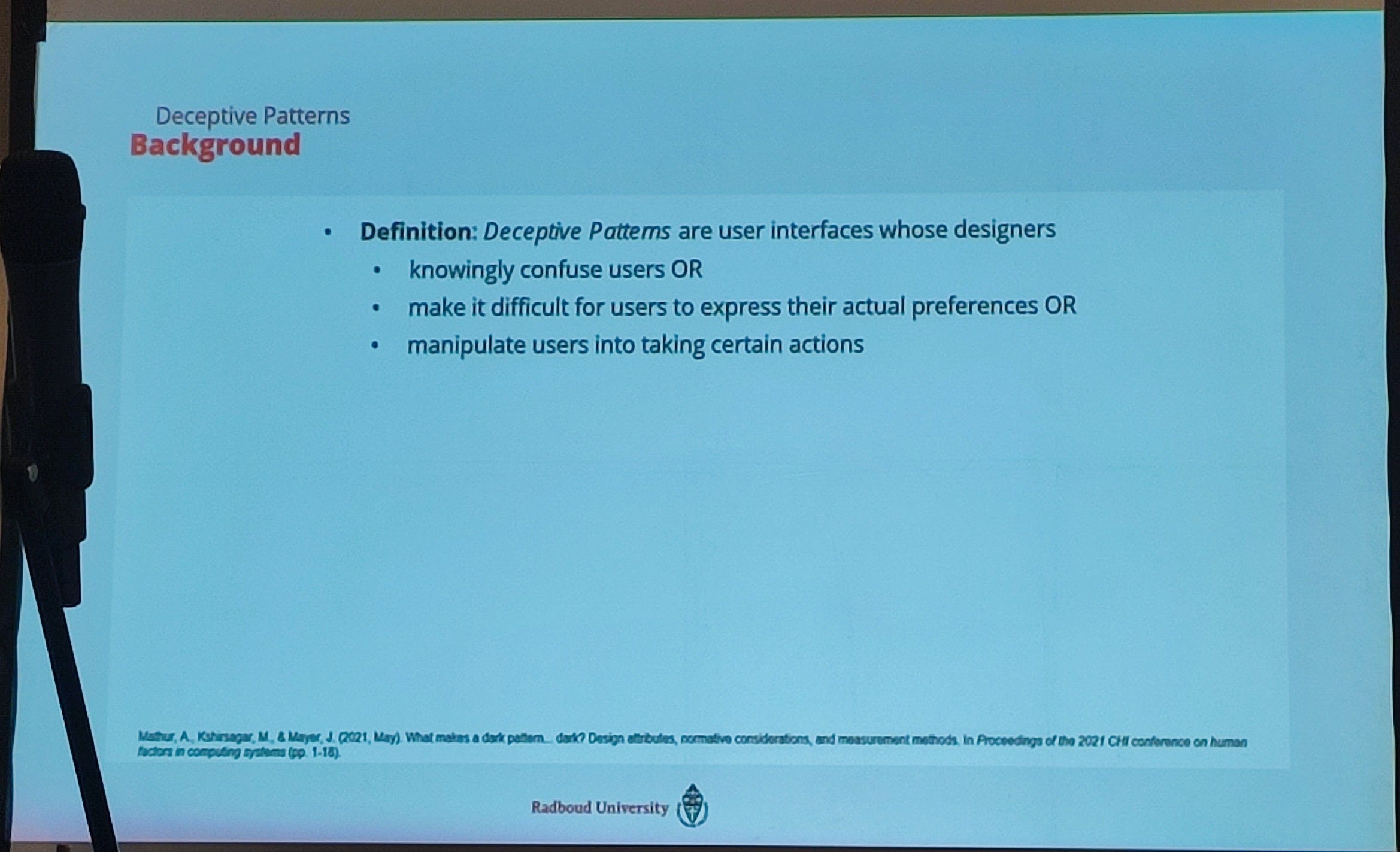
Deceptive design patterns
If deceptive patterns are the problem, can “fair” patterns solve it? The idea that fairness is always contestable resonated deeply, especially in accessibility work, where universal solutions often fall short.
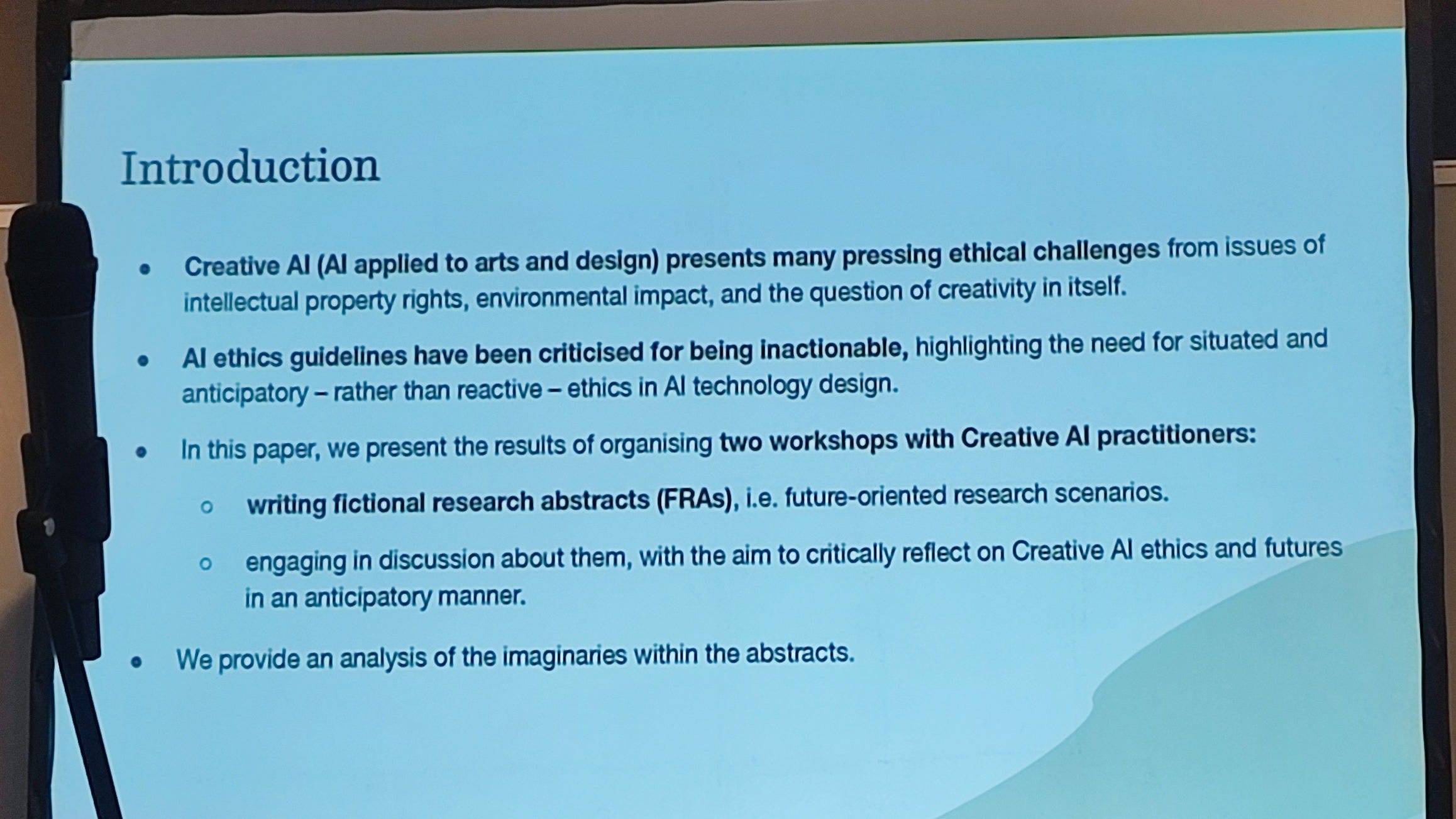
Creative AI imaginaries
One paper used fictional research abstracts to explore anticipatory ethics. It reminded me that imagination is not a luxury in research; it’s a necessity.
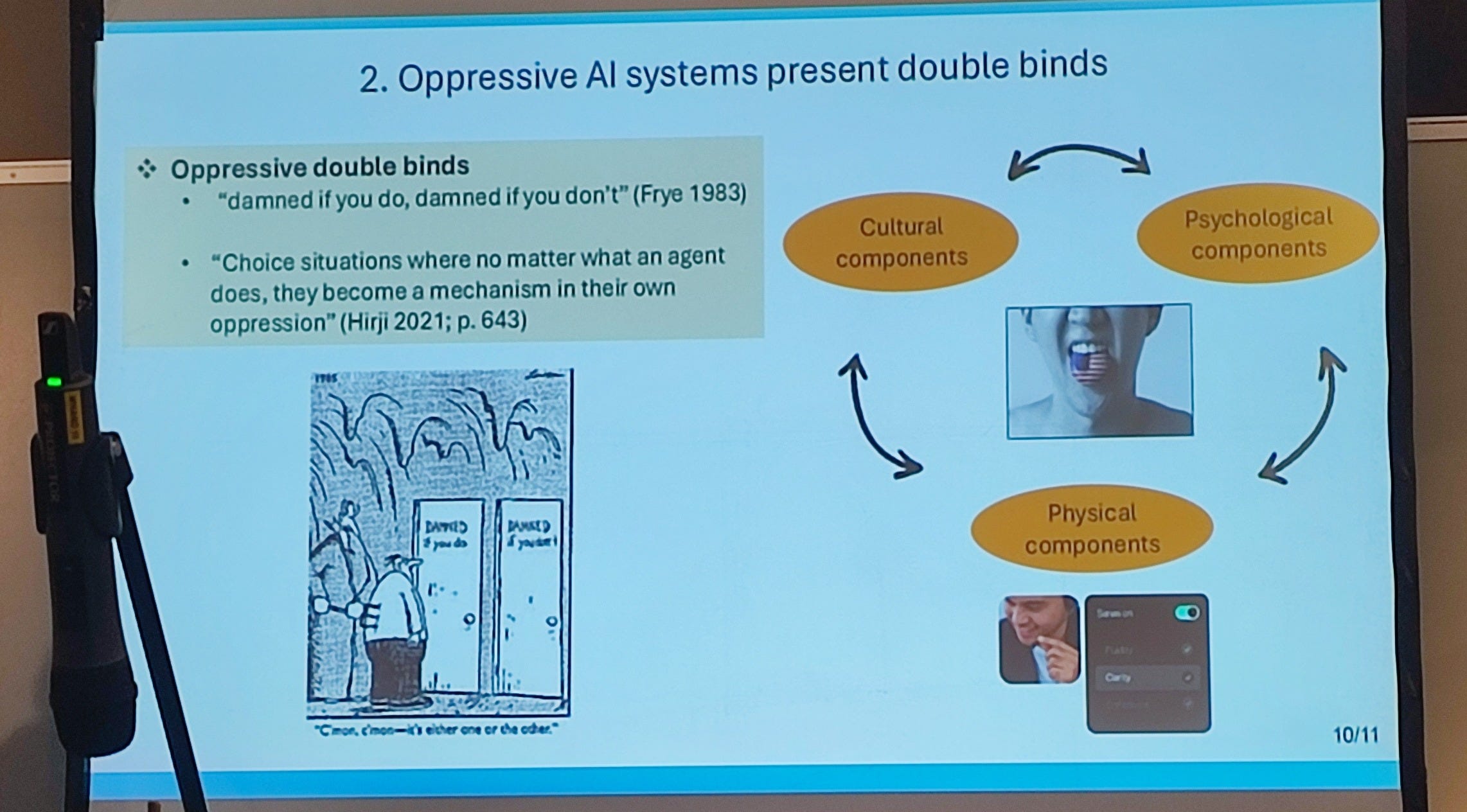
AI and oppression - Design and beyond
Discussions on how AI systems replicate and extend historical systems of oppression highlighted how physical design, style, and context all play roles in shaping experience.
Final Thoughts
FAccT reinforced something I’ve been struggling with for a while: ethical AI is not just about making systems “less biased” or “more fair.” It’s about who gets to participate in shaping those systems.
It’s about the structures that silence, exclude, or diminish certain voices. And it’s about design, not just of technology, but of process, collaboration, and imagination.
It’s about who gets to participate in shaping those systems.
I left the conference with a deeper commitment to embedding inclusivity not just as a checkbox, but as a methodology: participatory and relational.
If you’re working at the intersection of AI, accessibility, and participatory methods, I’d love to connect. Let’s keep building kind, critical, and creative spaces together.
Stay in touch with our team and the Data x Direction project:
Tlamalo Makati: Substack, LinkedIn, Bluesky
Jes Parent: Substack, LinkedIn, Bluesky, Twitter/X, YouTube
Data x Direction: Substack, LinkedIn
JOPRO: Substack, LinkedIn, Bluesky
A version of this article was originally posted on Tlamelo Makati’s personal Substack. All photos by Tlamelo Makati.
 | A guest post by
|